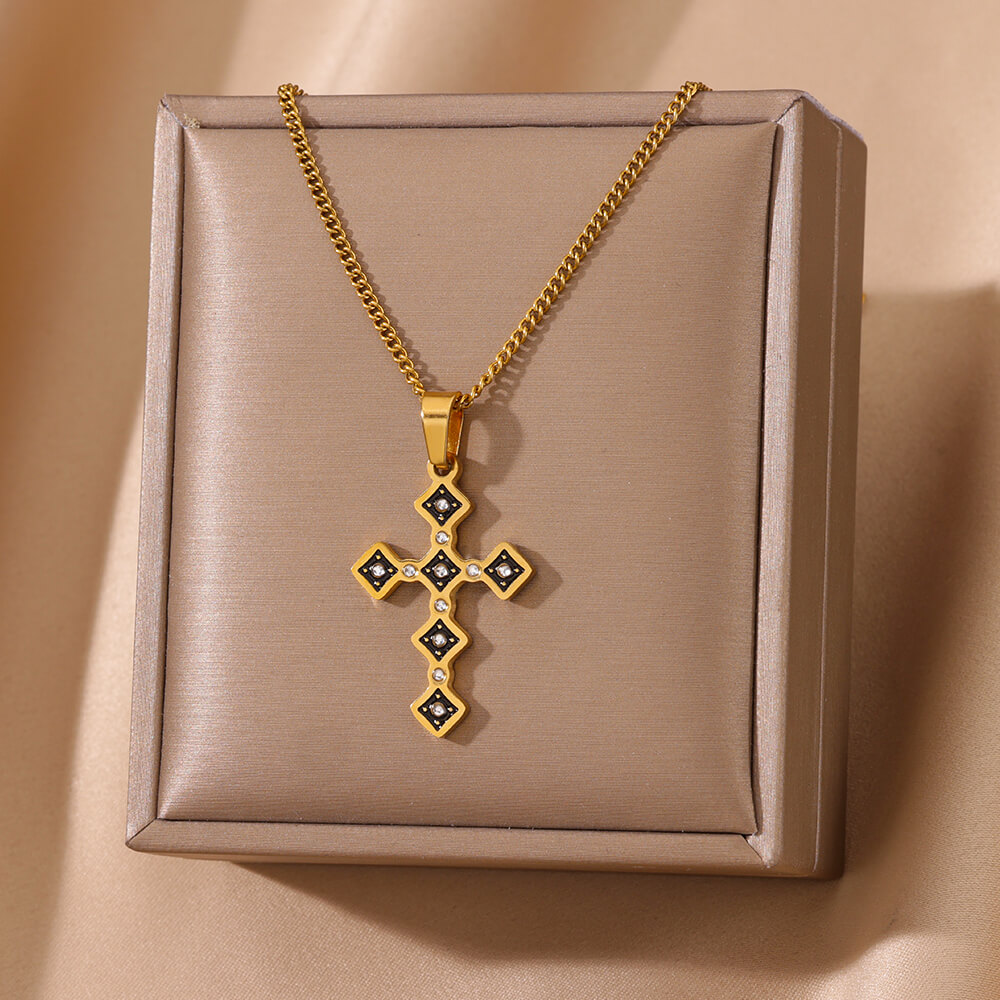
I used to believe these myths. I assumed buying accessories was straightforward. I’d always hunt for the lowest price on items like necklaces and other accessories, similar to how I’d look for a basic SumsFashion Discount on a simple men's cool beanie. Every single time, the item would break, tarnish, or leave a green stain on my skin. I spent $40 five separate times. That’s $200 down the drain.
Here’s the reality. Jewelry isn’t like buying socks. You need to know what you’re looking for. These five falsehoods are what keep low-quality brands in business.
The Lie: If a gold cross necklace is only $12, it must be a steal compared to one priced at $45.
Here’s what they don’t tell you: Extremely cheap metal is inexpensive for a reason. It uses an incredibly thin plating. That plating is just a microscopic layer of gold color over a base metal. When you sweat or shower, that thin layer wears off quickly. It can fade entirely within a week.
The Truth: Quality costs more because the plating is thicker. When you buy stainless steel jewelry, look for 316L Stainless Steel. This is surgical-grade material. It resists rust, corrosion, and tarnish better than any other type.
Verdict: Don’t buy jewelry that doesn’t clearly state the metal type. Super cheap means thin plating, which means your money disappears almost instantly.
The Lie: If the listing says "Stainless Steel," you’re safe from green skin and allergic reactions.
This is a common trick. There are many grades of stainless steel. Cheaper stainless steel often contains nickel. Nickel is the metal that causes skin irritation and the infamous green ring or neck stain.
The Truth: You must check for 316L. If the seller doesn’t include "316L" in the description, they’re likely hiding the fact that it’s a lower-grade steel full of nickel. High-quality vendors are proud to specify their materials.
Look at the difference:
Verdict: If it doesn’t say 316L, assume it’s low quality and will likely turn your skin green.